Showing posts with label dungeon world. Show all posts

10 June 2014

LEVEL BONE


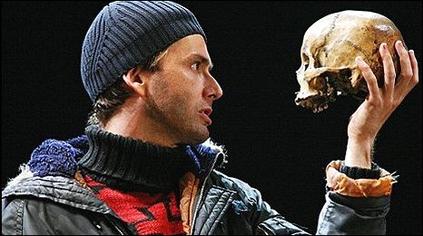
TRIGGER WARNING: SPOOKY SKELETONS


RATING: THREE SKULLS OUT OF FIVE


Last Sunday I got to actually play Dungeon World again and even though we only played with three players (and one of them was text-only), it was still a blast. Running Dungeon World is like leaning your head back into a cold waterfall; refreshing, bracing, and very, very messy.

As usual, we only got through one level. I'll double back and do the other levels later- this one was codenamed Level Fortress originally, but I decided to play off an offhand suggestion by one of my players:

He was goofing around in Roll20 with a box he'd made (you can doodle on the virtual whiteboard) and kind of stuck it next to one of his characters. I asked him what he was doing, and he said "I was bored at the end of the last session so I drew a box and was messing with it." *

"So what's in the box, then," I ask him. This is one of my favorite ways to play with other people- turn the question back on them! Let them create! Sometimes their idea is boring or uninteresting (sorry guys) but most of them time it'll at least be something you didn't think of, and will help you understand how they're viewing the imaginary world you're sharing.

He says it's a skull, and I say "that's absolutely true and oh shit you dropped it, it's falling down the stairs!" I'm not sure what compelled him to want to chase the skull down the stairs (maybe he just wanted to hang on to the skull- in Dungeon World, since your damage mostly depends on your class instead of your gear, it'd let him at least fling it at somebody if he wanted to, or maybe he thought it'd be a nice keepsake) or maybe he's saving it for a monologue?


Anyways, so he's chasing a rolling skull down the dungeon stairs, and now it's "getting away." I watched Spirited Away yesterday and, if you've never seen it, there are these weird green rolling heads that the bath-house witch keeps around and so in it went. The skull really is getting away, guys, it's going down the passage and you'll never catch it if you don't hurry up!

In that room was a box with some snakes, which they played with briefly, and then continued on. I can't remember what, if anything, inspired the idea of the Musical Skeleton Amigos ** but their first enemy encounter on that particular level was three spooky scary musical skeletons. One had a rattling maracas skull, one was playing its chest like a xylophone, and the last one was playing its head like a drum. They enjoyed that, although the skeletons didn't last very long. The paladin almost got his face eaten off (skeleton makeout session) and they got pretty banged up in general. Their armor took most of the suffering, I think, and they headed off after their skully friend without too much fuss.

The bard of the party decided to Spout Lore on the rolling skull- since he succeeded at his roll, he decided that he'd heard some sort of tale about this rolling skull. I decided his name was Roland (get it? Rollan'? Hyuk) and it was the head of a greedy adventurer who turned to evil. He always rolled towards treasure*** and that's pretty much the sum of him. They rolled him as he rolled his way into a room with a pile of burnin' bones. Between the arcane duelist and the bard, they managed to figure out that the fire was both magical and fake, although they spent a while figuring out if it would burn them. And what exactly the nature of the falseness was. Was it not actually magical fire? Was it "fake" magical fire? Was it fake "magical" fire? Spent the better part of ten or fifteen minutes puzzling over that one, to the point where even I was confused. They stuck their hand in and it was fine- and the skull came rolling out with an enormous purple gem!

They tried to corner it, but the skull kept on a-movin', and their efforts were in vain. Heedless of the dangers, they sprinted on- directly into the clutches of skeleton mage and his cronies! Behind them were even more skeletons, too! A pitched battle ensued, where they played skeleton ping-pong, hid behind each other, used the power of rock to clear away a necromantic fog, and spun like ballerinas into their foes. They ended up the victors and we had to cut it short because one of our players is a good five hours ahead of the rest of us and had obligations. Which is fine! We cut it short at a good resting spot and called it a day.

I think most of them leveled up (of those that were there) and I'll probably be talking to the ones that didn't show up and making sure that the time is good for them. It was a great session! Here's hoping the next one is at least as entertaining.


* Which felt bad, at first, but I'm hoping it wasn't my fault; I like to drink and DM and sometimes I get carried away by the end of the session. Or maybe it was just boring the whole way through? Maybe he was just goofing off while we were winding down?

** I just realized I missed an opportunity to give them sombreros and really play it up. Damn it.

*** Sometimes it's fun to confirm a hunch of your players, especially when you didn't actually plan it that way. If you keep your plans very loose, it's easier to change them to better fit the current mood and style of your players. In this case, I'm pretty sure that one of the players literally said "Well what if it leads to treasure," and that's a great damn idea. Treasure-seeking animated skull!


01 May 2014

Megadungeon World

I told my newest Dungeon World group last session that I'd be willing to run a megadungeon with creatures they wouldn't feel bad for killing, almost in those exact words. I regret nothing, but it is a pretty big departure. Megadungeons are hard!

But here's what I've been thinking.

There needs to be a town nearby, because a dungeon is a source of income like a new gold or silver mine, and people will build shelters and houses to be near the boom. In this case, there's already a town nearby;  a bit of tweaking with the results of a random fantasy name generator gives me Rakelia. The name sounds Roman, so I've decided that it belongs to a not-quite Roman Republic. Romans generally built forts and then settled with soldiers, so I can decide that there's a stone keep that has older buildings inside, occupied mostly by citizens, and that outside the walls are the non-citizens; slaves, adventurers, and services. 

The dungeon itself is (was?) underground, and was opened up by a fissure. I've decided that it's plate tectonics, which means that it looks a bit like this:

Imagine that the there were a handful of stone rooms half-opened by that fissure near the bottom

And it has the added bonus of meaning that the dungeon is going to be split along this crack and that there are really two sub-dungeons now that connect and diverge along the split foundations and crumbled walls and ceilings. Going up will be just as much "forwards" as going down, sometimes, and might even be the only way to bypass a particularly formidable barrier. Crossing the center fissure, at the narrower parts where the floors haven't collapsed too much, is possible, and sometimes the party's going to need to leave ropes down and scale to the next level without stairs or ramps.

For the denizens of the dungeon, the ancient and modern come together as spontaneous generation and Gygaxian naturalism come together. Lesser monsters and animals spawn wholesale in the dank dungeon grime, which provides food for the monsters that spawn biologically. Some more dangerous monsters are an open question as to their generation- are goblins profligate breeders or do they simply appear in untravelled and shadowy halls? Do otyughs spawn from underground midden heaps or do they somehow mate, tangled rubbery limbs and all?

I've decided that there are multiple entrances from the surface, as befits a dungeon of this size, but haven't nailed down exactly how many there are. There are are at least two, which I've named the Left Hand Path and the Right Hand Path, and they are both near the town. They require a bit of scaling to reach, and probably require a rope. The Right Hand Path is the one nearer the players, and the Left Hand Path will require the players to find a way around or across the gap.

I'm working on the wandering monster tables, and I haven't started mapping. The plan is that on each level there's a small handful of "set-piece" encounters that are more or less static, and the rest of the dungeon is handled by wandering monsters or random events (depending), the overarching environment (a little different for each level, and tied in with the "theme"), and just plain empty rooms.

A quick example of what I'm talking about off the top of my head:
With glorious orcs, of course


Level Six: High Alert
Environment: The orcs in this level have fortified multiple fall-back positions and the patrols are faster. Roll for wandering monsters twice as often. Orcs that are losing a fight will attempt to retreat to their Stronghold. Denote the escapees and include them in the Stronghold.
Stronghold: An enormously fat Orcish sergeant with a flaming blade is directing his soldiers. The archers are in elevated towers made of wood spiked with crude nails and provide supporting and accurate fire. The soldiers fight in a box formation, with the sergeant in the second row bellowing commands.
Room 1: Orcish ambush, they have set up spiked logs to direct foot traffic into a "kill zone" that will be feathered with their archers and repulsed by spearmen
Room 6: Prisoners, chained to walls. Most are recently dead or dying. All are wearing ragged clothes and bruised/beaten.
Room 15: Midden heap, mostly garbage but sometimes cool things get tossed in, too
Room 18:  Hole in the ceiling leads to Level Five.

Random Events (2d6):
1-2: Dogs barking and snarling in the near distance- it's orc beastmasters and war-dogs!
3-4: The players stumble into a trap; falling rocks, poison darts, covered pit (dumps into next level), leg trap
4-5: Organized patrol discovers the party: 1d6 orc warriors and either a sorcerer or a priest accompanying
etc etc

The random events will probably be in a table, so I'll be able to say how many times they're supposed to happen by marking them with a [] or ( ), so you could print it out and mark it with a pencil if you're playing at home, but my plan is to save it as a .png and doodle on it with paint. If I randomly roll something that's out of "charges," Ican either pretend it happens again anyways, roll again, or give them a break.

The important thing is that each time the players go back in the dungeon, if I write it this way, it's easy to see what will refresh and replace itself, and what won't. It's easy to say that even if the players carve out the heart of the Orcish commander and clear the Stronghold there are still some wandering orcs looking for treasure or food, or that there are some fresh traps that haven't been sprung by anybody yet. This means that even "cleared" levels are still plenty dangerous and more than capable of giving any party a run for their money.

So it should be fun. The plan is to write enough in advance that I know roughly what's going on and what's where to give the players a megadungeon experience inside of Dungeon World, which is going to be tricky. I might write the environment as Dungeon Moves instead (so that the Dungeon might make a move if the players roll a 6 when they're not in combat to simulate wandering monsters, or maybe in a particularly rickety floor there might be a Dungeon Move that goes when the players crash around, roll +Party Size and that'll drop one or two of them into the next level, where they'll have to deal with whatever's one floor below them, or something).

I'll need to draw maps soon; I hate drawing maps.

19 September 2013

Dungeon World Orcs

You finally spot your quarry- the dozen orcs that have set fire to your village and slew all of your friends. There couldn't have been more than twelve of them, but they were battle-hardened warriors where your fellow villagers were mostly farmers and their wives and children, and they put them all to the sword. None of them died. They stole everything of value, killed and cooked what livestock hadn't run, and left, singing songs in their strange tongue, mindless of the blood and gore that caked in their thick hair and in their armor.

You'd tracked them over the past day; not a difficult task, since they were obviously making no effort to hide or keep secret what they'd done. They marched at a quick pace, despite being obviously burdened with heavy armor and their huge, spiked weapons, and talked and chattered amongst themselves the whole time. Now that they've camped, they'd taken off their armor and they huddled around a single campfire, yapping at each other and wrestling among themselves, almost rolling into the fire once. They all laughed at that, but you watched in horror. These were the orcs that slew your village? Not a day ago they killed dozens of your kinfolk and now they were rolling around in the grass and making obscene gestures at each other? 

One of them, the largest one, snapped a command and the other orcs visibly sunk. Here was the boss of the warband. You had a tiny dagger that the orcs had deigned to steal, and it seemed useless against the scarred hulk that towered more than twenty feet from you currently stood. The huge orc had no helmet, and you could see that he was missing an eye. He glared out from his empty socket at the others, and cuffed one on the head. He spoke several sharp words, and then gestured at the sky. The orcs quieted and calmed down, and eventually they all went to sleep.

You were still standing there. What on earth were you going to do?


Let's talk about orcs.

In Dungeon World, Orcs are savage, bloodthirsty and hateful. They all swear fealty to a chief, and they are all trained to fight. Some of them are berserkers, transported to near-insanity during battle because of their demonic rites. Some of them are priests, who pluck out their own eye as a sign of devotion and make pacts with their gods for vengeance. Some of them are shamans, who talk to spirits. And some of them are slavers, who roam the seas looking to shanghai a crew or two. This is all directly from Dungeon World's writeups of the race, and is taken for absolute truth.

But is it? How much is exaggerated by terrified enemies, or disgusted onlookers? And most importantly- what can we infer from these descriptions?

Well, a lot, actually. Nearly everything you could want to know about a people is there, actually. Funny how that works, isn't it? So let's start with the basics and extrapolate where we can.


Stating the Obvious


If we take them at face value, we have a people who are pious, angry, and ready for battle, which we can clearly see from their aggressive disposition, their numerous warriors, their willingness to fight, and the central place that their shamans and priests hold in their society. This is the basic facet of orkiness- a sort of aggressiveness mixed with religiosity.

Each of these things tells a story about who orcs are, where they came from, and what they're like as individuals.


Orc armies, assembling

Ready for a Fight


Let's start with the most obvious facet of "orcishness," their combativeness. If every orc is taught to fight, then we can assume they have a strong martial tradition. Martial traditions occur only in societies with frequent low-intensity warfare, like Ancient Greece, Gaul, Mesopotamia, or Imperial China. In order for this to happen, the landscape must be of a type that supports at least city-states, and either large enough that a centralized government is difficult to administer efficiently, or dispersed enough that centralization is impractical entirely.

Both kinds share key features; in the absence of a centralized government, there are no kings to moderate in-fighting and direct their population growth towards an external enemy, there is no ethnic kinship (despite seeming similarities in language, appearance, and customs) so they remain free game to be enslaved or pillaged, and there are numerous feuds and rivalries with any neighbor, so that there is a kaleidoscopic web of temporary allies, potential enemies, and chains of atrocities committed on both sides.


This all, of  course, necessitates that there are cities, or at least permanent settlements, both because tribal nomads don't produce iron goods that orcs are known to possess, and because nomads generally do not have strong martial traditions, which orcs are again known to possess. This actually completely gels with their being described as hordes, because the peoples that have been historically referred to as hordes (i.e. the Roman's "barbarians" and the Mongolian Empire's "hordes" that enveloped swaths of Eurasia). Both of these people actually had complex societies with some fairly large cities (including the "barbarian" cities of Orleans, Bourges, and Chartres, which still exist today), trade routes, non-food producing specialists, a priestly class, and various other trappings of civilization.

So we've decided that they obviously have squabbling city-states, that they may or may not have had experiments in feudalism, and that they are very obviously possessed of at least a couple of disparate ethnic groups that fought constantly, leading to the establishment of a "warrior culture." This leaves us a couple of useful seeds you can use in your next game, including peaceful orcish cities, orcish ruins, and orc traders. Or possibly an ancient orcish battleground, or an orcish tomb of an ancient emperor.


Help From Above


Next up, we have their religion. Their religion is explained by three entries in Dungeon World- one of them being the Berserker, who undergoes a "kind of twisted knighthood" called Anointing By The Night's Blood, which turns a normal warrior-orc into a half-mad warrior whose madness never really ceases. This mirrors the real-life view of the Nordic berserkers, whose enemies believed that they looted, pillaged, and destroyed constantly in their horrible heretical frenzy. Of course, this isn't true- in real life, berserkers were highly valued and completely sane outside of battle, and even formed a regular part of armies and the personal guard of kings. But we do, undoubtedly, have a sort of holy warrior here. Can you say paladins?

Secondly, their religion is described in the entry on the Orc One-Eye, where a lengthy prayer of vengeance is delivered to one "Gor-sha-thak, the Iron Gallows," praying for vengeance against an unnamed foe, invoking the powers of night, of runes, and of the clouded sky. This, again, sounds fairly nordic; runes, blood magic, and one-eyed gods being a notable part of the Norse pagan worldview.

Lastly, you have the entry on the Shadowhunter, who is literally a holy order of assassins. They serve He of Riven Sight, the one-eyed god, and use poisons and shadowy magic to kill people that the orcs deem unworthy. This tells us a whole lot about orcs, once again- namely that there is enough left of orcish society to support not only a priestly caste, but to have holy assassins. This implies a high degree of organization, of information about other societies, and of frequent stretches of peace. After all, you don't send assassins to kill people that you're attacking- you send in assassins when they're not expecting it. This puts a wrinkle in the nordic theme, of course, and lends a sort of ancient middle-eastern paganism in. Which is kind of neat- now we've got a bit of interplay with lunar symbolism, the shadows of night, and a bit of the vengeance pokes through once again.

So when you put it together, what have you got?

An orcish general surveys the carnage he has wrought

Who's The Tusked Dude Over There?


A people who willingly meet their enemies in battle with no qualms for "fairness" or "honor," watched over by one-eyed sky gods hungry for sacrifice and for rivers of blood, who sail the oceans in their reaving ships, pillaging and plundering the cities of their foe-men, led by priests and berserkers anointed by night, commanded by chieftans' force of will and strength of personality in a de-centralized world of city-states and feudalism.

From this, we can extrapolate that orcs are independent, pious, and unafraid of personal sacrifice. They value personal accomplishment and do not acknowledge inherited prestige or positions, although they're not stupid and won't do things like disrespecting a king in his own castle, surrounded by guards. An orc makes friends and enemies easily, and has little to no truck with stupid notions like honor. To the victor goes the spoils, says the orc, and if the gods didn't like betrayal and backstabbing maybe they should do something about it. They tend to act rather than think. They talk with their hands and are vivacious. Their language is harsh and fast-paced, and tends to be made of compound words rather than unique words for each thing. A troll would be an uglywartmonster, and an dragon would be flyingfirelizard, for example.

Want to play them yet? Me, too. But I haven't written the rules just yet. Maybe check back tomorrow?


Looking Back

They say that if you don't look back at who who were from a year ago and cringe that you haven't grown enough. What if I look back f...