Showing posts with label roleplaying. Show all posts

19 September 2013

Dungeon World Orcs

You finally spot your quarry- the dozen orcs that have set fire to your village and slew all of your friends. There couldn't have been more than twelve of them, but they were battle-hardened warriors where your fellow villagers were mostly farmers and their wives and children, and they put them all to the sword. None of them died. They stole everything of value, killed and cooked what livestock hadn't run, and left, singing songs in their strange tongue, mindless of the blood and gore that caked in their thick hair and in their armor.

You'd tracked them over the past day; not a difficult task, since they were obviously making no effort to hide or keep secret what they'd done. They marched at a quick pace, despite being obviously burdened with heavy armor and their huge, spiked weapons, and talked and chattered amongst themselves the whole time. Now that they've camped, they'd taken off their armor and they huddled around a single campfire, yapping at each other and wrestling among themselves, almost rolling into the fire once. They all laughed at that, but you watched in horror. These were the orcs that slew your village? Not a day ago they killed dozens of your kinfolk and now they were rolling around in the grass and making obscene gestures at each other? 

One of them, the largest one, snapped a command and the other orcs visibly sunk. Here was the boss of the warband. You had a tiny dagger that the orcs had deigned to steal, and it seemed useless against the scarred hulk that towered more than twenty feet from you currently stood. The huge orc had no helmet, and you could see that he was missing an eye. He glared out from his empty socket at the others, and cuffed one on the head. He spoke several sharp words, and then gestured at the sky. The orcs quieted and calmed down, and eventually they all went to sleep.

You were still standing there. What on earth were you going to do?


Let's talk about orcs.

In Dungeon World, Orcs are savage, bloodthirsty and hateful. They all swear fealty to a chief, and they are all trained to fight. Some of them are berserkers, transported to near-insanity during battle because of their demonic rites. Some of them are priests, who pluck out their own eye as a sign of devotion and make pacts with their gods for vengeance. Some of them are shamans, who talk to spirits. And some of them are slavers, who roam the seas looking to shanghai a crew or two. This is all directly from Dungeon World's writeups of the race, and is taken for absolute truth.

But is it? How much is exaggerated by terrified enemies, or disgusted onlookers? And most importantly- what can we infer from these descriptions?

Well, a lot, actually. Nearly everything you could want to know about a people is there, actually. Funny how that works, isn't it? So let's start with the basics and extrapolate where we can.


Stating the Obvious


If we take them at face value, we have a people who are pious, angry, and ready for battle, which we can clearly see from their aggressive disposition, their numerous warriors, their willingness to fight, and the central place that their shamans and priests hold in their society. This is the basic facet of orkiness- a sort of aggressiveness mixed with religiosity.

Each of these things tells a story about who orcs are, where they came from, and what they're like as individuals.


Orc armies, assembling

Ready for a Fight


Let's start with the most obvious facet of "orcishness," their combativeness. If every orc is taught to fight, then we can assume they have a strong martial tradition. Martial traditions occur only in societies with frequent low-intensity warfare, like Ancient Greece, Gaul, Mesopotamia, or Imperial China. In order for this to happen, the landscape must be of a type that supports at least city-states, and either large enough that a centralized government is difficult to administer efficiently, or dispersed enough that centralization is impractical entirely.

Both kinds share key features; in the absence of a centralized government, there are no kings to moderate in-fighting and direct their population growth towards an external enemy, there is no ethnic kinship (despite seeming similarities in language, appearance, and customs) so they remain free game to be enslaved or pillaged, and there are numerous feuds and rivalries with any neighbor, so that there is a kaleidoscopic web of temporary allies, potential enemies, and chains of atrocities committed on both sides.


This all, of  course, necessitates that there are cities, or at least permanent settlements, both because tribal nomads don't produce iron goods that orcs are known to possess, and because nomads generally do not have strong martial traditions, which orcs are again known to possess. This actually completely gels with their being described as hordes, because the peoples that have been historically referred to as hordes (i.e. the Roman's "barbarians" and the Mongolian Empire's "hordes" that enveloped swaths of Eurasia). Both of these people actually had complex societies with some fairly large cities (including the "barbarian" cities of Orleans, Bourges, and Chartres, which still exist today), trade routes, non-food producing specialists, a priestly class, and various other trappings of civilization.

So we've decided that they obviously have squabbling city-states, that they may or may not have had experiments in feudalism, and that they are very obviously possessed of at least a couple of disparate ethnic groups that fought constantly, leading to the establishment of a "warrior culture." This leaves us a couple of useful seeds you can use in your next game, including peaceful orcish cities, orcish ruins, and orc traders. Or possibly an ancient orcish battleground, or an orcish tomb of an ancient emperor.


Help From Above


Next up, we have their religion. Their religion is explained by three entries in Dungeon World- one of them being the Berserker, who undergoes a "kind of twisted knighthood" called Anointing By The Night's Blood, which turns a normal warrior-orc into a half-mad warrior whose madness never really ceases. This mirrors the real-life view of the Nordic berserkers, whose enemies believed that they looted, pillaged, and destroyed constantly in their horrible heretical frenzy. Of course, this isn't true- in real life, berserkers were highly valued and completely sane outside of battle, and even formed a regular part of armies and the personal guard of kings. But we do, undoubtedly, have a sort of holy warrior here. Can you say paladins?

Secondly, their religion is described in the entry on the Orc One-Eye, where a lengthy prayer of vengeance is delivered to one "Gor-sha-thak, the Iron Gallows," praying for vengeance against an unnamed foe, invoking the powers of night, of runes, and of the clouded sky. This, again, sounds fairly nordic; runes, blood magic, and one-eyed gods being a notable part of the Norse pagan worldview.

Lastly, you have the entry on the Shadowhunter, who is literally a holy order of assassins. They serve He of Riven Sight, the one-eyed god, and use poisons and shadowy magic to kill people that the orcs deem unworthy. This tells us a whole lot about orcs, once again- namely that there is enough left of orcish society to support not only a priestly caste, but to have holy assassins. This implies a high degree of organization, of information about other societies, and of frequent stretches of peace. After all, you don't send assassins to kill people that you're attacking- you send in assassins when they're not expecting it. This puts a wrinkle in the nordic theme, of course, and lends a sort of ancient middle-eastern paganism in. Which is kind of neat- now we've got a bit of interplay with lunar symbolism, the shadows of night, and a bit of the vengeance pokes through once again.

So when you put it together, what have you got?

An orcish general surveys the carnage he has wrought

Who's The Tusked Dude Over There?


A people who willingly meet their enemies in battle with no qualms for "fairness" or "honor," watched over by one-eyed sky gods hungry for sacrifice and for rivers of blood, who sail the oceans in their reaving ships, pillaging and plundering the cities of their foe-men, led by priests and berserkers anointed by night, commanded by chieftans' force of will and strength of personality in a de-centralized world of city-states and feudalism.

From this, we can extrapolate that orcs are independent, pious, and unafraid of personal sacrifice. They value personal accomplishment and do not acknowledge inherited prestige or positions, although they're not stupid and won't do things like disrespecting a king in his own castle, surrounded by guards. An orc makes friends and enemies easily, and has little to no truck with stupid notions like honor. To the victor goes the spoils, says the orc, and if the gods didn't like betrayal and backstabbing maybe they should do something about it. They tend to act rather than think. They talk with their hands and are vivacious. Their language is harsh and fast-paced, and tends to be made of compound words rather than unique words for each thing. A troll would be an uglywartmonster, and an dragon would be flyingfirelizard, for example.

Want to play them yet? Me, too. But I haven't written the rules just yet. Maybe check back tomorrow?




09 June 2012

RODIEL: SLAYERS


Designing slayers was fun. They're bloody, brutal, and mean, and their design really bears that out. Their backgrounds (presented here) really reinforce the idea that Slayers don't have a place in society. Whereas Sentinels make excellent guards and heros for the city-states of Rodiel, and Rangers are specialists, guides, foresters, and spies, Slayers live entirely to kill people. They're the Gilgameshes, the larger than life heroes that people really wish would go away until it's time to kill another monster. They generally fight with little armor and with whatever weapons are handy, although when it's time to choose they usually select an impossibly heavy weapon that only people of their calibre can bear to use.

More Slayer backgrounds should be forthcoming, but for now, just take a peek at these. I feel these really help to get a feel for the way Rodiel works. There's nothing wrong with imposing a little bit of setting on your players' characters- it's the easiest way to remind them that their characters are very much a product of their society.


SLAYERS

Red-Handed: You are a member of a mystic order of warriors who ritualistically tattoo one hand bright red, an agonizing process that takes days. But your faith in your mysticism allows you to recover one fatigue when you slay an enemy. If you do not consume the flesh of your enemies at the end of every battle, you lose this benefit, as the God of Blood you worship demands this.

Enormous: You are significantly larger than the average man. While your equipment costs half again as much as a normal man, you can carry twice as much on your person.

Motivated: A being of incredible vitality and spirit, you can deplete your fatigue past zero, towards a negative amount equal to your normal fatigue total. However, pushing yourself past your own limis means that you have to sleep an extra hour for each negative point until you have equalized your sleep debt.

Savage: You spit on effeminate and cowardly sorcerers- you know that with your lucky charms and observances of taboos you cannot be harmed by their ways. Your will counts for 1.5x normal when resisting magic- for as long as you follow a stringent and conspicuous taboo.

Demon-limbed: One of your arms is actually a hideous, begrimed demon parasite that's grafted to your chest. It is supernaturally strong and functions as an excellent example of the weapon of your choice of light or medium type. For obvious reasons, you cannot hold anything else in that hand. In addition, the parasite is not entirely under your control, and may decide to do its own thing at inopportune moments.

19 April 2011

Complete and Utter Nonsense.

Is what MS Paint Adventures are. And yet this site has managed to devour something like 10 hours of mine in the past two days. Yeah, I'll grant you that I've got grand fuck-all to do with myself these last few days but cmon. For anything to have occupied anybody's time for that long, in two sittings, is something that strikes a very bizarre chord in somebody's mind.

Lemme give a quick example from Homestuck, one of three (four?) adventures on the site.

Welcome to the party, motherfuckers!
That image is of one Rose Lalonde who is barbecuing some variety of harlequin Imps with her occult knitting needles that she'd alchemised using Build Grist she'd gotten from slaying an Ogre by stabbing it in the eyes and riding it down the waterfall on the side of the house that appeared when she was transported from her world to a game world in order to save her from a predestined apocalypse that spans hundreds of thousands of years and at least three time paradoxes so far.

Yeah, it's a trippy ride. But it makes a lot of things really interesting. You can smell all of the self-references, references to gaming media (text adventures, obviously, but also mystery novels, big screen movies, roleplaying games, computer games, you name it, it's somwhere in there), it breaks the fourth wall multiple times, and it's basically utterbrual radness. It's rudenasty. It's other words that I'm stealing from the adventure itself because you probably haven't read it and even if you did, it's more of a clever homage than actual theft (see how I covered my bases there?) and it's awesome.

It's exactly the sort of bizarre, self-indulgent, free-wheeling, make it up as you go along and tie it in anyways silly-serious fiction that attracts young gamers (like yours truly, of course) to old-school gaming. There's nothing like strapping on your +2 Shield, consulting your talking psychic sword, and going into a ten thousand year old crashed spaceship filled with frogmen with tentacle faces and martian teleporting panther things to plunder the advanced technology for a fraction of its worth (if anybody knew how to use it) and selling it to some toothless old man for a fistful of silver because he's got a pointy hat and a great big shining stick.

When I get this Donjon nonsense rolling next month, it's going down. We've already got a half-started game with a Zombie Meatmancer and a Werewolf Mercenary planning on breaking into a town with the Meatmancer's bile magic to scour a hole in the walls and then wear the population's skins for some bizarre and arcane reason. I see nowhere for this campaign to go but straight sideways, because we're already on the rollercoaster of btichin' awesomesauce and the ride's just startin'.

Lovin' it, baby. Lovin' it.

30 October 2010

Health and D&D: Part Two

The man on the left is about to suffer 1d6 damage.
Let me lay down some heresy real quick today. 

The problem with hit points isn't that weapons do too much damage, or that regular joes have too few hit points, or even that zero hit points shouldn't equal death because that's not how it works in the real world.

The problem with hit points is that they scale shittily. And here's how.

A level one dude, let's say a Fighting Man rolling a d8, has roughly four hit points. That's enough to take a good whack from a mace or a sword and go down. Much like warriors in real life, he's going to avoid letting his enemy strike a telling blow that will fell him. This man is cunning and clever enough to survive these trials and tribulations and acheives level two. Suddenly, the man has 8 hit points- twice as many as before. In a single level, he's doubled his hit points, and at level three, he gains another roughly 4 hit points, to a total of twelve. By the time he hits level four, a Fighting Man with average constitution and average luck will have managed to attain 16 hit points- he's four times as tough as he was before. His possible range of hit points is between 4 and 32.

That's kind of silly. 

It would be interesting if Fighting Men gained a small bonus to health, similar to the +3 bonus they gain instead of an additional hit die after a certain level- what if the first die were the only one rolled? What if all they ever got was the first hit die, and after that they gained a bonus to armor class, or a flat reduction in damage taken?

Hit points act like a sign, "You must be thiiiiis tough to enter!" And that's not cool. It honestly surprises me that in an old-school revolution where dungeon masters and players alike cry "Challenge the players, and not the characters!", that there would be hubbub about skill systems but none about leaning on stacks of hit points to deal with problems. I exaggerate, of course, but really- it means that certain challenges aren't doable unless you have passed certain in-game requirement.

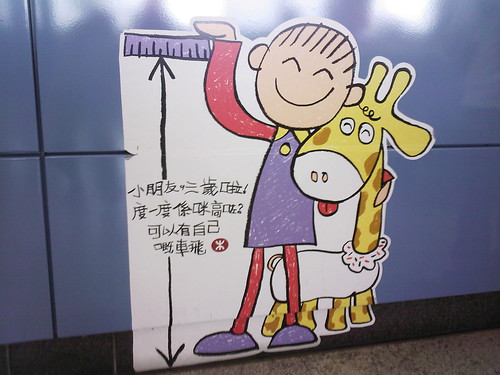
You must be this tall to hug giraffes.
What if health and level were totally disconnected? What if you never got more health, but instead just gained your other class features? Would you have to continue to play cautiously even when just facing more "boring" foes like other humans, and goblins? Would monsters have to be redesigned and rethought so that a challenging fight consisted less of ever-increasing super powers and more so there's a reason that a stupid race of fat cannibals can exist? 

Would we ever have to make players go in a goblin warren ever again?

03 October 2010

The New Game

After we got Jeff back from drill, we set out to roll up some characters. I intentionally kept the house-ruling to a minimum, using only the following modified rules:


Practically spartan by my standards! But I thought it would be important, since we're planning on trying out the Rotating DM Hat trick, where we each run a session or two and then switch out. Maybe more of a short arc for each DM, so that we accomplish something and then when the campaign reaches a natural lull (for example, after the dungeon's cleared we go back to town and rest up, invest in some real estate, fix our armor, and set our sights on the next goal; this would be an ideal time to switch up the DM and get some "fresh air" into our adventuring.) 

The DM hat. Singing optional.
But keeping houserules to a minimum is helpful when you're switching like that and is, as I understand it, one of the reasons that AD&D had such a strictly defined ruleset- it makes life easier when the default assumption is that you'll be taking your character from one world to the next with a minimum of translation. But there's no reason that a similarity of rules couldn't be contained by one group, especially with the world as murkily defined as it currently stands.

After all, there's nearly nothing defined about it except what will be defined during play, such as the fact that Tony decided to be a pseudo-Arabian cleric whose name translates into "Servant of the Protector", thereby indicating that there's A) A pseudo-Arabic culture and B) A Protector-Diety of some prominence in that culture. Depending on how the game goes, it could either be a Zoroastrian-style Protector versus the Defiler, or it could even be a polytheistic religion worshipping the Protector, the Mighty, the Sage, and so on as personified manifestations of human nature. Or maybe not. That's the fun of organic gameplay, if you ask me- it suits perfectly the players and the Dungeon Masters, since we're the ones making it up on the spot.

Let me introduce the current cast of players, as it stands:

We currently have myself as Dungeon Master, T. Hamingston as a desert nomad Cleric, Allison as a sage Wizard with powers of trickery and warfare, and a proud Samurai adventurer. It's shaping up to be a pretty good party. When I play, I think I might be a Dwarf or and Elf- despite my disdain for race-as-class (and not for the reasons you think, more than likely), they're useful and valuable allies in their own bailiwick. The Dwarf is a powerful warrior in his own right, hardy and capable and possessing of useful underground perceptions, and the Elf is both a fighting man and a scholar of the arcane arts, and has keen senses in his own right. We'll have to see, I suppose, before the dice are rolled and the die cast. Even the lowly Theif isn't out of the question!
What does this mean for the poor Aremorican Addendum? Well, the game will still go on, the next time Tony's girlfriend comes over, but it'll be totally separate, especially since they'll be my "guinea pig" group and then we'll have a much looser organization, with each rotating Dungeon Master bringing different ideas and specialties in the game. Like a Theives' World game, roleplayed. If you will.

09 August 2010

The Best Retroclones

Since my other post was extremely (excessively) negative and it didn't let me stretch my writing wings hardly at all, here's another post to tide you over, one with a little more positivity. Yes, it's time to write about the Best Retroclone.

It's a distinction with highly subjective statements that may or may not apply to you, my gentle, well-mannered, and undoubtedly attractive reader. You may howl in rage at my gross miscalculations, and scream in impotent rage at my idiocy. Bear with me, as my opinions are not without reasons.

4th Best Retroclone: Basic Fantasy
Basic Fantasy: Old-School, redesigned
I'm not a big fan of Basic Fantasy. It's an old-school game bolted onto the chassis of 3rd edition gaming, and it shows. It's better than 3rd edition, but it diverges in order to make efforts to "improve" the game and make it more "modern" while still having the spirit of old-school. The spirit is admirable, and it's a good effort, make no mistake. But there's something about it that just isn't for me. I wish I could articulate it. Maybe a greater mind than myself will be able to do so?

I suppose it might be the way that it takes the trappings of all editions and bundles them together which throws me off a bit. I may be in the minority, but there are distinct flavors of gaming between AD&D, oD&D, BECMI, and the like, and each flavor is delicious in its own right. But some things aren't meant to be mixed together?


3rd Best Retroclone: OSRIC


OSRIC, the AD&D retroclone


OSRIC almost got chosen as my favorite Retroclone. This is from a man who has played almost no AD&D, who is notorious for ignoring vast swaths of rules he doesn't like. But it was the first retroclone I discovered.

I can't remember how or why I discovered it, but I do remember why I liked it so much: It has half orcs, and assassins, and rangers. Half-Orcs are awesome; they have a mixture of sadness and raw power, a sort of sullen majesty. They're men of mixed descent, looked down on in most "civilized" society for faults which are not their own. They didn't ask to be born of the mixture of man and orc any more than other men asked to be born of two men, or of two dwarves. But still they are sneered at, mocked, and unwelcome. This sort of pathos appeals to me, and ensures that half-orcs get a spot at my gaming table where few other demihuman races do.

But as a game, OSRIC suffers from the same faults that AD&D does as a whole. It's a little clunkier, a little more obtuse. It has non-weapon proficiencies, secondary skills, sub-classes, and the like. Much like AD&D proper, it simply feels like it's been cobbled together from bits and peices.

Still, it's a good game. A very solid choice for anyone, though my heart lies elsewhere.

2nd Best Retroclone: Swords and Wizardry
Swords and Wizardry: A 0e D&D retroclone.
Swords and Wizardry is a fantastic game, and always draws me nearer and nearer to its clutch every time I read about it. It's simple, eloquent, and easy to modify, which is the whole point of old-school games.

You'll notice that the image is of the S&W Whitebox, rather than the S&W proper. That's because of the two, I prefer the Whitebox for its open-canvas feel. Both of the editions are spectacular, and are covered in evocative art, excellent writing, and clear statements. It has "optional rules" that have become standard features in other games, such as Strength increasing your damage scores, or Dexterity improving your Armor Class. It also features a single Saving Throw, which is nice and easy to remember, and still allows for plenty of customization (by, for example, allowing Dwarves a bonus against saving throws for poison). Swords and Wizardry is a beautiful, beautiful game, and the Knockspell magazine published by the same company is a great companion.

Best Retroclone: Labyrinth Lord
This writer's favorite retroclone.
If you didn't know I was going to say this, welcome to Lawful Indifferent. This is a blog about retroclones, old-school games, and wargaming.

Bad humor aside, this is my favorite retroclone. Not only does it emulate one of the most popular editions of old-school D&D, it does it well. Beautifully, I might add. It retains the race-as-class feature, multiple saving throws, and easy to digest and understand formatting. The layout is heavenly and the interior art is awesome.

I prefer the purple and black cover of the older edition, but I also supported getting the full-with-art interiors for free, so what do I know? Despite the new free to get edition not having any interior art, this version is still my favorite. It just plain plays well!

In addition, it has the extremely useful and very well received Advanced Edition Characters, or AEC that adds the Ranger, Druid, Assassin, and other classes into the game. It's like taking the best of AD&D and sticking it directly into basic D&D. Not to mention the Original Edition Characters, another "expansion" of the core rules that emulates the "Little Brown Books" of oD&D. I don't have much experience with them myself, but they seem to have gotten fairly high marks from those that have used it.

There's just something about Labyrinth Lord that really gets my creative juices flowing, and the spark in my belly fired. It makes me want to create endless campaigns and design stuff until my fingers wear grooves into my keyboard. You really need to try it if you haven't already.

06 June 2010

Why are all the good names taken?

The more work I put into my homebrew game, the more frustrated it gets that it doesn't even have a name. It has a codename, and that's about the extent of it. You see, I'm trying to avoid:


  • Alliterations. Dungeons and Dragons, Labyrinth Lords, Tunnels and Trolls; while they're all classic games, they're not what the game should be compared with. This game isn't classic, and it's not particularly old-fashioned, although older roleplaying games are its main focus. It also has a good mix of some independent games, Forge-style, if you will. But trying to have a slightly silly name reminiscent of the old classic isn't something that I relish. To people that like D&D, they'll still play D&D. For people that don't like it, they'll have to waste their valuable first impression time on insisting that it's not like D&D even though it has an alliteration.
  • Long, Wordy Names. I haven't the testicular fortitude to name a game something like Lamentations of the Flame Princess or Descent: Journeys in the Dark (which isn't strictly a roleplaying game, but c'mon), or Warhammer Fantasy Roleplay. They imply a certain grandiosity that makes one think of five hundred page games with complex, interlayering rules that I dislike. If my game gets to be more than 50 pages, I'll be shocked and probably have to cut something. My inspiration is the Little Brown Books, not the Encyclopedia Britannica that is 4th edition D&D. Long titles suggest long-winded writing, and a certain lack of economy of words.
  • Acronyms. GURPS is a horrible name. Horrible. I don't care what it stands for, when one says the acronym it sounds like a vulgarism for vomit. And if you say it out, it's another Long, Wordy Name. 
  • Colons. White Wolf lives off of acronyms, and they make buyers sound like idiots. What do they call a game about Vampires? Vampire: The Masquerade or Vampire: The Requiem. I realize that the game is marketed towards people who are interested in a "gothic roleplaying game", but the game would have had a much, much better title of just "Requiem" or "Masquerade." For another stinker, try "Mage: The Awakening." Again, just Awakening would have been a much, much better name. I just don't understand the point of having such a formulaic name. No, "Subject: The Descriptor" is straight out.

I'm currently toying with sticking one-word titles on top of my rough draft and seeing what sticks. For example, the name "Portcullis" makes it sound like a game about defending keeps and "Iron Gauntlet" makes me think of power metal and arcade games.

Clearly, naming a game is an art more than a science, and unfortunately, I'm a poor artist.

23 February 2010

Secret of Steel Notes II: Sorcery!


Sorcery, and indeed all magic, is a difficult thing to put into one's game. By its very nature, Sorcery must have its own rules. Sad, indeed, is the magic system that is a mere extension of the game's skill system, level system, or some such. There have been entire games devoted to mages, wizards, and the like, where the magic system is what the game revolves around. Ars Magica, for one, and Mage: The Awakening for another. One could, of course, argue that the magic system is the star of the show in 3rd Edition Dungeons & Dragons as well. 

But in a more pulp-fantasy, sword-and-sorcery adaptation of the idea, where does sorcery fit in? How powerful is it? Who can use it? What is its price? These are all things that must fit together for a comprehensive use of magic in any game.


28 December 2009

Introduction

Allow me to introduce myself. My name, or alias, rather, is Nick. I am heavily into geeky things, and have been for years. I started playing D&D with my brother when we stumbled upon my dad's old AD&D guide, a blue book with a man riding a horse, slashing at a dragon on the cover.

I think it was just the right time for me to have found the book- I was bright enough to puzzle out the rules on my own, more or less, and we'd play as best we understood. We didn't have dice or character sheets or anything, but we would play diceless and, basically, rely on our understanding of both fairness and the capability of our characters. Oh, and drama. We would both work on creating the most interesting story we could.

Once bitten, I could never turn my back. I still look fondly back at AD&D, warts and all, as the foundation for my passion for gaming. These days, I play a little bit of MMOs, a little bit of regular old console gaming, some RTSes, some Warhammer Fantasy. A little bit of everything. I'm a hobby gamer by blood, and it's just who I am.

Looking Back

They say that if you don't look back at who who were from a year ago and cringe that you haven't grown enough. What if I look back f...